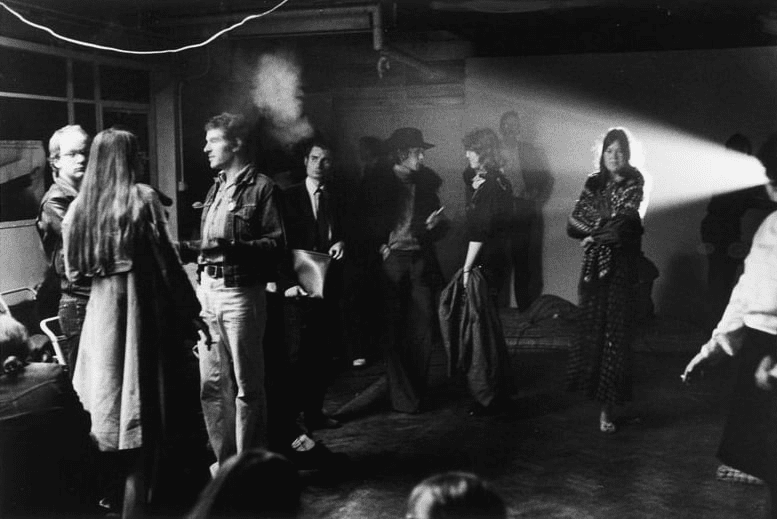
The London Film-Makers’ Co-operative succeeded in establishing a lasting tradition for the production, screening and distribution of moving images in the UK. In doing so, the organisation laid the foundations for a national school of structural film, all housed under one roof. Read more at london-trend.
The Founding and Evolution of the London Film-Makers’ Co-operative
The London Film-Makers’ Co-operative (LFMC) launched on 13 October 1966. It was established by a group of enthusiasts including Bob Cobbing, Jeff Keen, Simon Hartog and Stephen Dwoskin. They initially gathered at the Better Books bookshop, which served not only as a literary hub but also as a breeding ground for independent cinema. This created a unique environment where various artistic disciplines interacted and enriched one another.
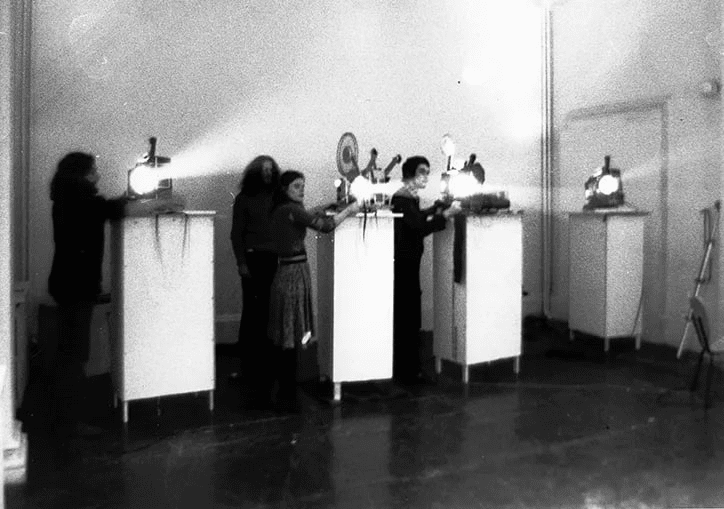
The LFMC was pioneered by its integration of three distinct activities within a single space: film production, exhibition and distribution. It boasted its own creative workshop, a cinema and a dedicated distribution arm. This freedom to experiment allowed filmmakers to maintain complete control over every stage of the process, from the initial concept to the finished work.
On 31 October 1966, the Spontaneous Festival of Underground Films became one of the LFMC’s first major public gatherings. This six-day event proved to be more than just a promotional exercise for the fledgling organisation; it was a significant cultural milestone. It offered audiences the chance to immerse themselves in the works of Kenneth Anger, Stan Brakhage and Marie Menken, marking the first time a representative programme of American avant-garde cinema was presented to a British audience.
Throughout the following year, the LFMC held regular screenings at Better Books. However, the shop’s paperback department was soon closed, and Bob Cobbing lost his position as manager. Operating from private addresses, the group continued their collective efforts at other venues, including the Institute of Contemporary Arts and the Arts Lab — a new space that officially opened the same month the bookshop shut its doors.
In 1968, the LFMC became more organised with the appointment of American filmmaker and actress Carla Liss as its first full-time distribution secretary. Her involvement aimed to strengthen ties with New York cinematographers, such as Jonas Mekas, Stan Brakhage and Jack Smith. Furthermore, she expanded the organisation’s catalogue through collaboration with the New York Film-Makers’ Co-op.
By the 1970s, the LFMC had established itself as a central platform for independent film, both in the capital and on the international stage. Its distribution collection grew from a few dozen titles to several thousand. Despite this, the organisation’s physical infrastructure remained extremely modest. Constantly balancing on the edge of financial stability, it operated on a shoestring budget within derelict premises.
Ceasing its independent existence, the LFMC merged with London Electronic Arts in 1999 to create the Lux Centre for Film, Video and Digital Arts. In 2001, the organisation evolved into LUX, taking responsibility for the collections of both the former LFMC and LEA. This new entity continued to champion historical avant-garde works alongside the projects of emerging artists, while also actively promoting exhibitions, educational programmes and publishing.
Recognition and Legacy of the London Film-Makers’ Co-operative
Thanks to the London Film-Makers’ Co-operative, dilapidated buildings in the capital were transformed into magnets for artists, intellectuals and cinephiles. It provided a space where the likes of Peter Gidal, Carolee Schneemann, Annabel Nicolson, David Larcher, Mike Dunford and David Crosswaite could realise their creative ambitions. Together, they formed a community that challenged commercial culture and strove for absolute creative independence.