


London is a city that can boast of a huge number of world-famous locations. When tourists come here, they simply don’t know which place to visit first. The diversity of tourist attractions is really impressive here. Both connoisseurs of exquisite architecture, as well as enthusiasts of an active lifestyle and exciting adventures, will be satisfied in this city. London can also impress and touch the heart of majestic and unique melodies seekers. This type of tourist will definitely want to visit one of the most famous organ halls in the world. Here, music is steeped in centuries-old history and its walls hide the names of numerous talented performers and composers. Learn more at london-trend.
HISTORY OF THE HALL AND ITS UNIQUE LOCATION
The exquisite Grand Organ is the main decoration of the Royal Albert Hall, which was built in honour of Prince Albert during the reign of Queen Victoria in one of the most famous parts of London. The Royal Albert Hall of Arts and Sciences became one of the most popular and notable buildings in the world. A large number of various concerts, performances, operas and award ceremonies take place here every year. The seating capacity of the hall is approximately 9,500 people. Its stage saw a lot of debut concerts of many famous musicians. For musicians, this place is a unique opportunity to present their talent, while tourists can take a fascinating excursion.
The very history of the hall’s creation is no less interesting and imbued with a thirst for art. It all began with Prince Albert’s creative hobbies. His interests often turned into grand exhibitions and beautiful projects. The Prince dreamt of building the Royal Albert Hall of Arts and Sciences. Unfortunately, he couldn’t see how his idea was implemented because he died long before it was materialised. Queen Victoria decided to continue her husband’s initiative and placed a monument to the Prince and built an elegant building opposite it. An interesting fact is that the land under construction was purchased for money that the Prince raised on the exhibitions during his lifetime. A solemn hall opening ceremony took place in 1871.
UNIQUENESS OF THE GRAND INSTRUMENT
Most musicians and tourists from different parts of the world come to the hall to see the second-largest organ in Great Britain. If the visitors manage to get inside during the performance of the musical composition, the limits of their admiration expand to unprecedented dimensions. The history of the instrument is connected with a large number of events in both the social and artistic spheres. In addition, a lot of outstanding specialists and musicians worked on its construction and further improvement. The organ (in its original form) was created by Henry Willis & Sons in 1871. If we compare it with the modern appearance, it becomes obvious that it was just the beginning of something grandiose. The organ was almost completely rebuilt by Harrison & Harrison. After two stages of extensive reconstruction in 1924 and 1933, it became the largest organ in Great Britain at the time. At the end of the 20th century, the condition of the instrument deteriorated significantly. There were a lot of cracks, almost the whole row of registers didn’t work and its wind system needed some repair too.
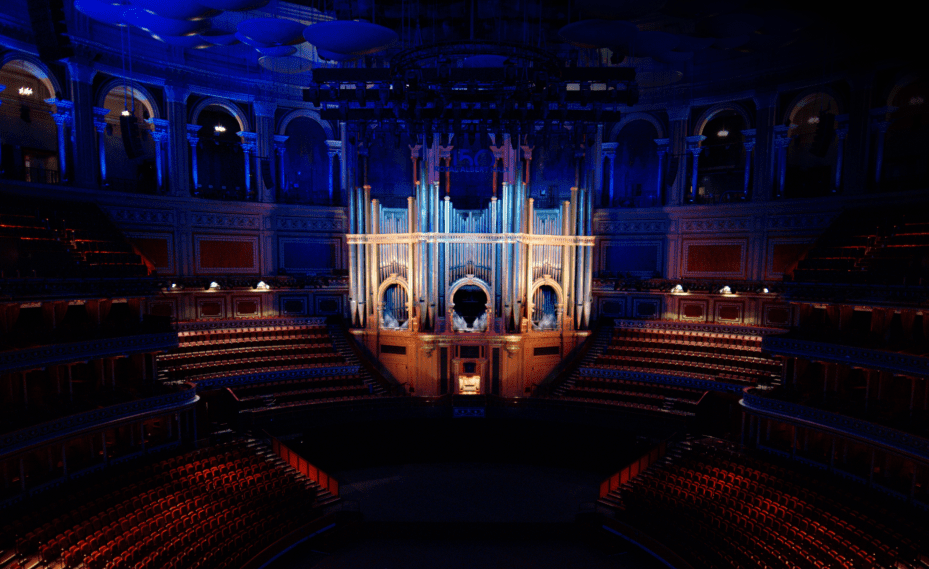
In 2002, the Mander Organs organisation undertook another reconstruction. This time, the whole hall underwent reconstruction, during which the roof was completely removed and the walls were also restored. In two years, the renovated hall was presented at a gala concert. The Grand Organ impresses with its historical beauty, which was successfully combined with modern elements.