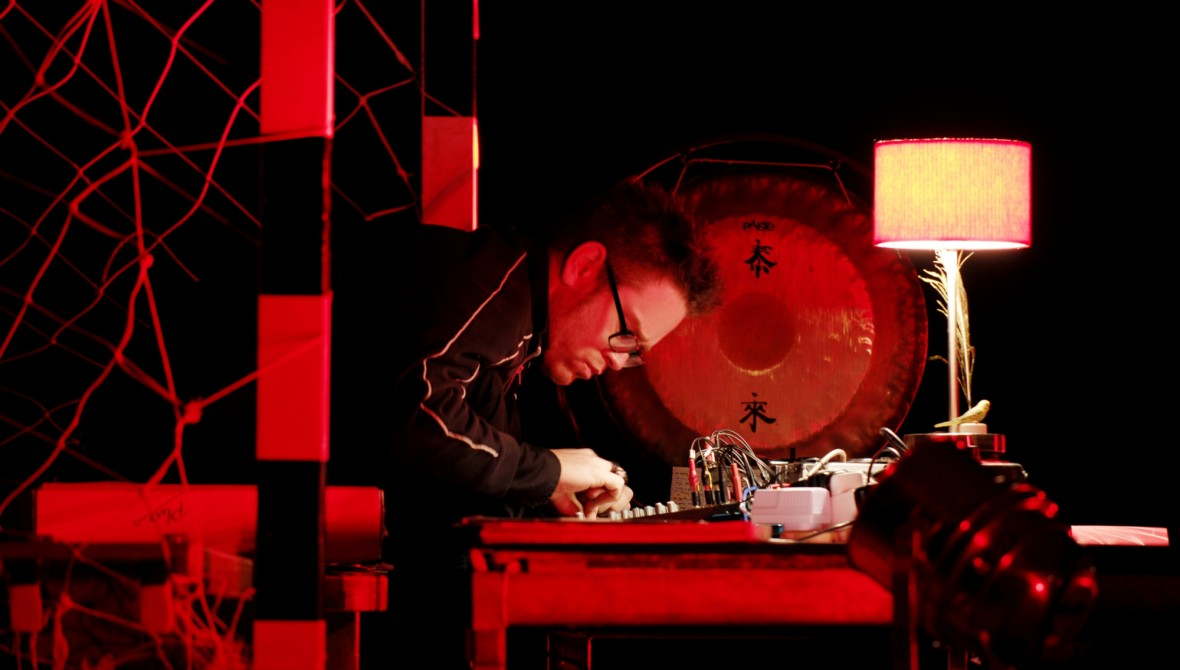
Janek Schaefer is a British sound artist, composer, and inventor celebrated for his experiments that blend ambient music, field recordings, and electro-acoustic innovation. He has ingeniously transformed turntables and vinyl records into instruments for creating unique musical worlds, earning him international acclaim in the art scene. Schaefer’s name has long been a symbol of innovation in the world of experimental sound. Read more on london-trend.
The Early Years and Janek Schaefer’s Artistic Journey
Born in London in 1970 to a Polish-Canadian family, Schaefer’s first experiments with sound began in childhood, where he created collages from various audio fragments. A new creative phase began at the Royal College of Art (RCA), where he studied architecture under the guidance of the legendary designer Ben Kelly. It was here that his first notable project was born: the sound composition Recorded Delivery. For this experiment, the young artist recorded the start and stop of a voice-activated dictaphone as it travelled through the post overnight. The work became part of the Self Storage exhibition, which was highly praised by Time Out critics.
After winning the annual RCA prize for best portfolio, Schaefer invented a unique ‘tri-phonic’ turntable in 1997. This instrument allowed him to create music from used vinyl records, opening up a world of endless sonic manipulation. His work combined serendipitous noise, electronic textures, and acoustic elements, forming emotional soundscapes that, in the artist’s words, “inhabit the architecture of the imaginary eye.” The turntable was eventually listed in the Guinness Book of Records as “the world’s most versatile.”
In the same year, Schaefer released his debut album, His Masters Voices, which featured reverse playback, launching his own label audiOh! Recordings. In 2000, he presented his studio debut Above Buildings on the Fat Cat label, gaining recognition among fans of experimental music and joining the ranks of renowned artists like Fennesz and Oval. In 2004, another experimental project, LP Skate, was released, which evolved into an audio-visual installation. This work earned the artist the prestigious Award of Distinction at the Ars Electronica Festival in Austria.
In 1999, Schaefer once again proved that his approach to sound went far beyond tradition. For the single ‘Wow’ on the Diskono label, he developed an innovative vinyl cutting technique called Shifted Centre Vinyl. The method involved shifting the spiral groove from the centre of the record to its edge. This caused the turntable’s tonearm to move from side to side, creating distinctive fluctuations and unpredictable rhythmic patterns. The turntable itself became an active participant in the musical composition, transforming the playback process into a live improvisation.
After receiving the Paul Hamlyn Award in 2008, Schaefer launched Lucky Dip Disco—a disco and open musical environment for people of all ages. His idea was for attendees to browse a box of old 7-inch records and choose those that triggered personal memories. The following year, his work gained widespread recognition in the UK cultural scene. In 2009, the Bluecoat gallery in Liverpool organised a major retrospective that spanned five exhibition halls.
The Recognition and Significance of Janek Schaefer’s Experimental Music
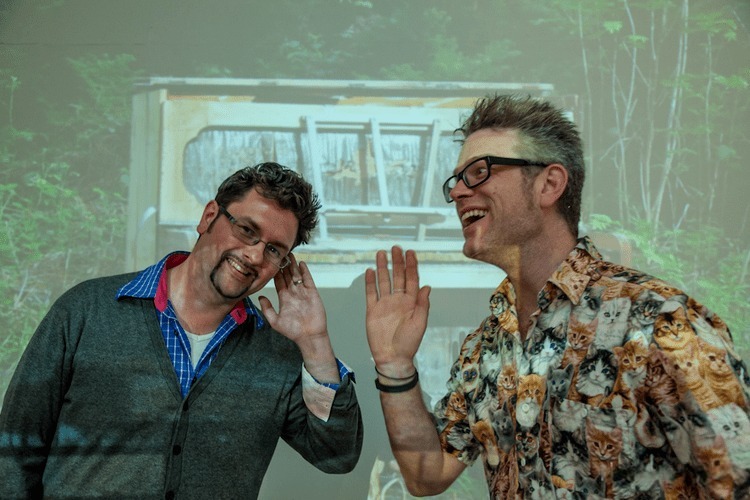
Janek Schaefer holds a significant place among contemporary sound artists whose work combines ambient music, field recordings, and social commentary. Known as the inventor of innovative turntables and vinyl playback techniques, he has pioneered new ways of interacting with sound, turning mechanics and randomness into key elements of composition. He has released approximately 40 albums, with What Light There Is Tells Us Nothing, Hidden Name, Phoenix & Phaedra Holding Patterns, In the Last Hour, and Glitter in My Tears holding a special place. His recognition is further underscored by collaborations with influential musicians, including Charlemagne Palestine, Philip Jeck, and Robert Hampson.