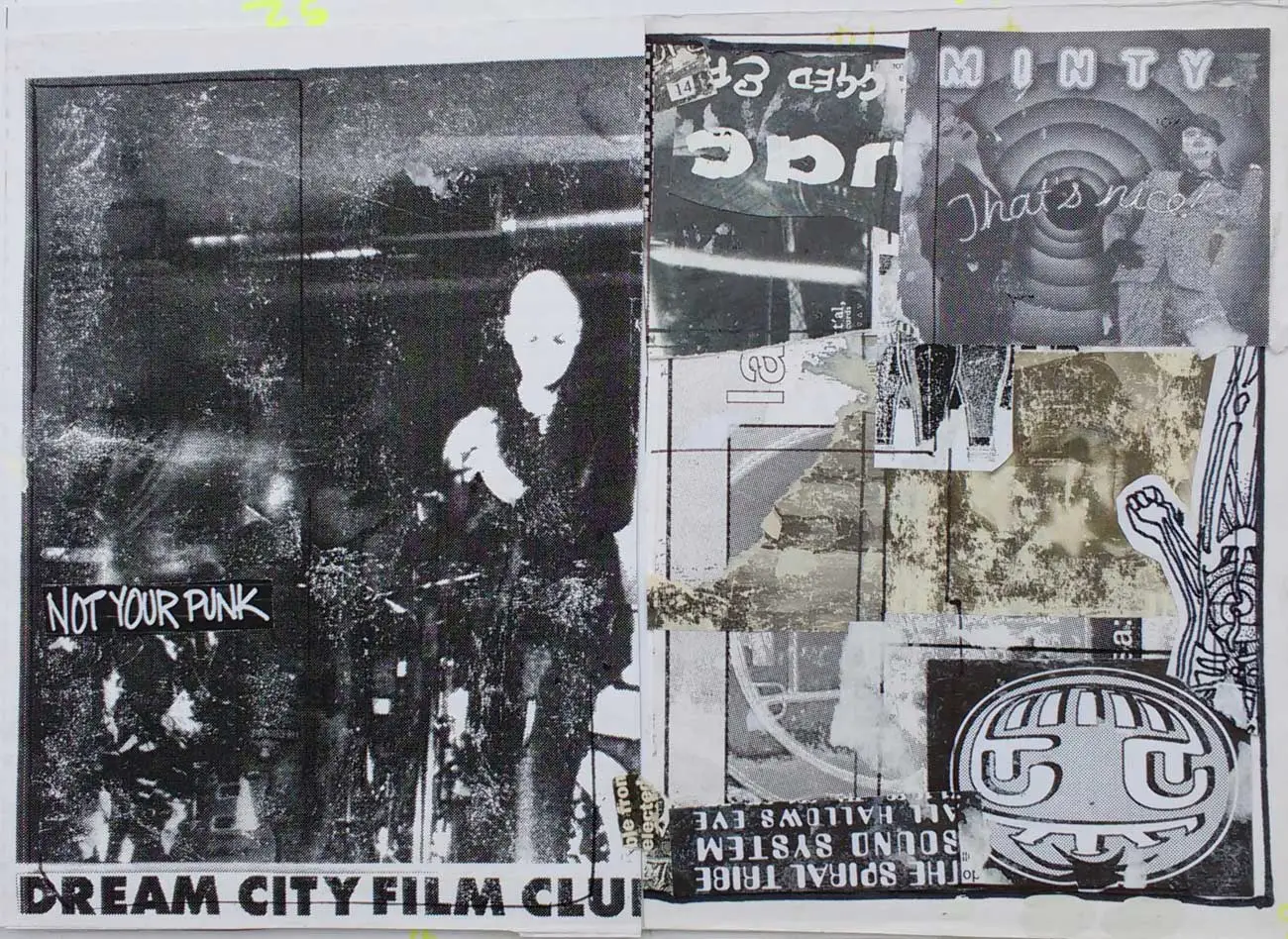
Organ started life as a handmade fanzine, a true DIY affair with stencilled covers, spray paint, and hand-stapled photocopied pages. For nearly four decades, it has remained one of the brightest symbols of the British independent media. The magazine grew into a major cultural project that combines music, art, and subculture, all while maintaining its unwavering dedication to a bold, authorial voice. Read more on london-trend.
The Founding and Development of the Organ Fanzine
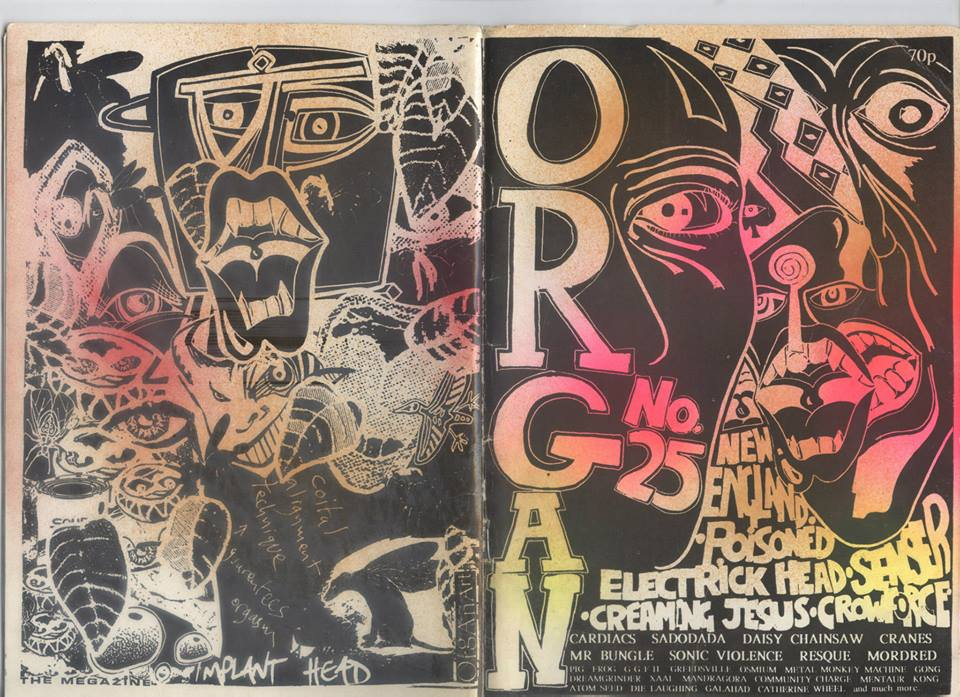
In 1986, two London art students, Marina Organ and Sean Worrall, decided to create their own fanzine called Organ. They felt an almost physical need to create and share their work with others. As no one was covering the young artists’ favourite bands and gigs, they decided to do it themselves — with no editorial constraints and a completely uncompromising attitude.
The initial print run of the first Organ fanzine, a mere 100 copies, sold out in two days. The pair mostly sold them outside concert venues, where the atmosphere was perfect for chatting with future readers. Demand was so high that they increased the print run to 300 copies. Released three months later, the second issue maintained the same handmade aesthetic: silk-screened, toxic spray-painted covers with hand-cut stencils, and pages that were photocopied, folded, and stapled. The third issue reached a print run of 1,000 copies, and its creation became an exhausting but inspiring all-nighter.
By the early 1990s, the Organ fanzine was being published more regularly and began to experiment with formats. The fourth issue came with a bonus: the Organ Radio C90 cassette, which featured a compilation of music from the bands reviewed in its pages. This was the moment ORG Records was born. Initially, it was a cassette-only initiative to release compilations and recordings by friends and acquaintances, including bands like No One, The Lettuces, and Bolt Thrower. This later developed into a full-fledged operation that also included organising gigs. Sean Worrall and Marina Organ’s project eventually evolved into a glossy magazine with national and international distribution. At its peak, it had a circulation of approximately 20,000 copies every two months.
After two decades of active development, 2008 marked a moment of change for the Organ fanzine. In its final years as a print publication, it remained dedicated to alternative and underground music but gradually began to embrace new media formats and ceased its paper run. By the time the last issue was released, Marina Organ had shifted her focus to radio broadcasting, creating musical rhythms, and working with animation. At the same time, Sean Worrall, who had been both co-editor of Organ and ORG Records and the artist behind numerous album covers, increasingly focused on his own painting and exhibitions.
Ultimately, the Organ fanzine was reborn in November 2012 as a modern website. This relaunch preserved its original spirit, but gave it the new tools and speed of online media. One of its regular features became “Organ Thing of the Day,” a daily recommendation that spotlights a music track, an exhibition announcement, or an art event. In parallel, it publishes album reviews, reports from art exhibitions, interviews, themed compilations, and short news pieces. As of 2025, the site has a steady audience of around 10,000 weekly visitors. However, this number often increases significantly when a label, band, or artist featured in a publication shares the material on their own social media.
The Recognition and Significance of Organ’s Work
Beginning as a homemade fanzine, Organ has become an influential media project with an international audience. It has retained its characteristic energy, bold subjective style, and freedom in choosing its topics. The magazine played a vital role in the development and popularisation of various genres—from punk and progressive to metal and experimental music—as well as in covering a wide spectrum of contemporary visual art. The magazine’s key tool of influence was the ORG Records label, which discovered and supported dozens of bands, including The Brian Jonestown Massacre, Breed 77, Pure Reason Revolution, and many others. Under the Organ brand, over 1,000 gigs were held in London, where many now-famous performers took to the stage for the first time.