


Music has always been an integral part of our lives. Sometimes, it is even difficult to imagine how a person can create such wonderful sounds. In today’s world, it looks easier because of the rapid development of modern technologies. However, we shouldn’t forget about the legacy left by outstanding composers who created masterpieces hundreds of years ago. British composer Thomas Attwood made a huge contribution to this sphere. Considering his story, we can trace the general features of musicians’ lives in 18th-century London. Learn more at london-trend.
COMPOSER’S CHILDHOOD, ORIGIN AND THE FIRST INTEREST IN MUSIC
Thomas Attwood was born in London on November 23, 1765. There are several theories about the origin of the composer, but one of the most popular is that Thomas’ father was a musician in the royal orchestra. This version is the most believable. After all, the boy was fond of music from childhood and had considerable talent. At the age of nine, he became a chorister in the Chapel Royal. His first teachers were composer James Nares and organist Edmund Ayrton. Thus, he acquired the necessary knowledge and skills for a successful start of his professional career. However, he needed further study to begin serious musical activity. So, Thomas Attwood was sent to study abroad in 1783. The boy got this opportunity because he managed to make a favourable impression on the Prince of Wales playing on the harpsichord. At first, Thomas lived in Naples for several years and later moved to Vienna, where he became a student of Mozart. People rumoured that Thomas Attwood was one of the favourite students of this world-famous composer. After returning from such an interesting and exciting journey, Thomas was a chamber musician to the Prince of Wales for a short period of time.
CAREER DEVELOPMENT AND VARIETY OF COMPOSITIONS
Thomas Attwood’s musical career began when he took the position of organist in St. Paul’s Cathedral. Around that time, he became a composer. In addition, the musician taught some members of the royal family from time to time. In 1806, he wrote a unique composition, A Grand Dirge, and performed it on the organ at Lord Nelson’s funeral. Thomas’s next work was the musical setting of the traditional anthem, I was Glad, which he created especially for the coronation of William IV. The composer was also one of the first members of the Royal Philharmonic Society, founded in 1813. In 1818, he became one of the founders of the Regent’s Harmonic Institution. After the creation of the Royal Academy of Music, Thomas Attwood received the position of professor there.
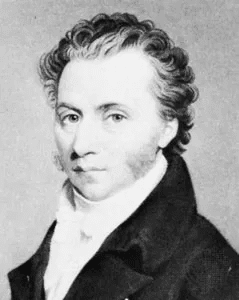
His creative work was generally devoted to religion. The historical period, in which the composer lived, was distinguished by the enormous influence of the church on all spheres of people’s lives. Religion was closely connected with politics. Therefore, no official event took place without musical accompaniment, which included religious compositions. The most famous compositions of Thomas Attwood are O God who by the leading of a star, Teach me, O Lord, Turn Thy face from my sins and Come, Holy Ghost. In general, his work reflects the influence of his teacher Mozart, as well as the tradition that was typical of the English church art of the time. It was a combination of several styles. The family of the famous composer also became his creative inspiration. He had five sons and one daughter. His children became quite influential, although they had no talent for music. Thomas Attwood very often taught music to people from the upper class of society and also had several friends among them. A talented musician died in 1838. He was buried in the crypt under the organ located in St. Paul’s Cathedral.