


London can boast of a large number of theatres. Some tourists come to the city to visit such places in a certain period of time. Each of the local theatres has its own special atmosphere and represents an incredible stage world. Actors live the lives of their characters, whimsical scenery complements the images and modern technologies of sound, while lighting and special effects make it possible to reproduce works of art in reality. The audience, in turn, receives unforgettable emotions and sensations. The Ambassadors Theatre is one of such places. What distinguishes this institution from others and what history is hidden behind its walls? Learn more at london-trend.
GLOBAL WORLD EVENTS THAT HAPPENED SIMULTANEOUSLY WITH THE OPENING OF THE THEATRE
Unfortunately, the opening of the Ambassadors Theatre took place shortly before the start of the First World War. It happened on June 5, 1913. The theatre building represented an amazing architectural idea that was implemented in reality. It was assumed that the institution wouldn’t be too big. It had to become a cosy and comfortable place for many connoisseurs of theatre art. Probably, for this reason, and because of the terrible events caused by the war, the theatre didn’t manage to quickly gain popularity. However, all the difficulties on the way to success didn’t affect the professional skill of the actors and the high-quality organisation of the performances. In 1921, the theatre presented the famous tragic play The Emperor Jones. Agatha Christie’s legendary play The Mousetrap was one of the most successful and long-running performances not only in London but also in the whole of Great Britain. It was also shown in the Ambassadors Theatre from November 1952 to 1974.
Some important changes took place in 1996 when the Ambassador Theatre Group bought the theatre building. It was divided into two parts. Its interior and exterior were also slightly changed. In 1999, it was decided to return the original design and change the name of the institution. Thus, it was named the New Ambassadors Theatre. Local theatrical life also underwent a transformation. The theatre began to stage unusual and interesting, but at the same time less large-scale and well-known performances. Later, theatre representatives considered a return to the classical programme. Such a solution seemed more attractive from a commercial point of view. The autumn season of 2006 was marked by the staging of the Waiting for Godot play. The theatre presented a series of other successful plays, such as Little Shop of Horrors, Whipping it Up and Love Song. In April 2007, the theatre was resold and a large-scale reconstruction process began. In September, the institution presented the grand dance show Stomp for the first time. Later, it became traditional and was shown here from time to time until 2018.
THINGS EVERY VISITOR SHOULD KNOW ABOUT THE PLACE
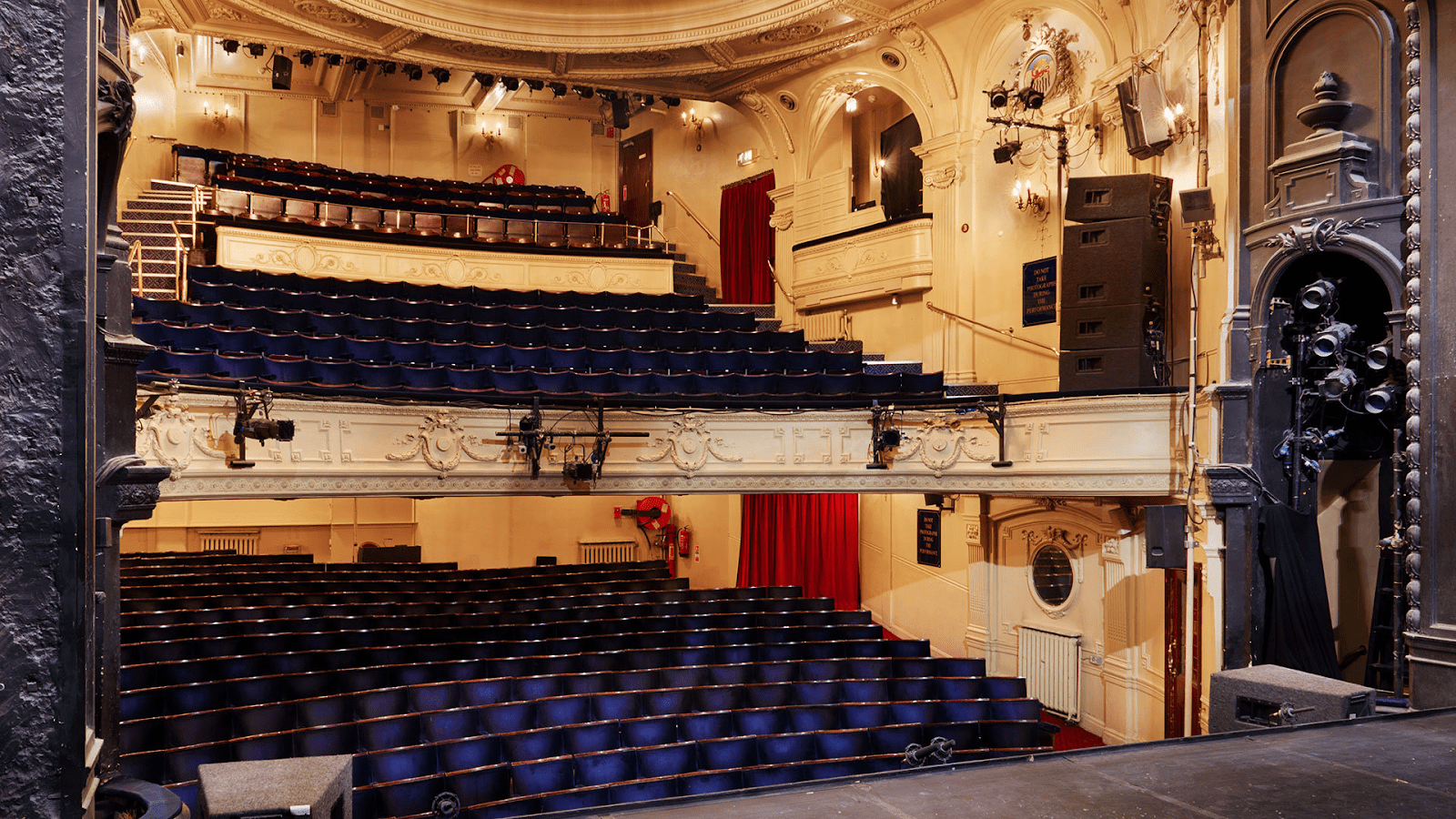
The Ambassadors Theatre is a modern creative space where people enjoy art. Representatives of the theatre try to create all the conditions for a comfortable and joyful pastime. It is quite easy to get here by public transport or car. There is a Charing Cross Station nearby, as well as two bus stops. Parking is also available here (sometimes the theatre provides additional discounts). The building is adapted for people with disabilities. The theatre has a card system that entitles holders to additional bonuses. At the same time, visitors must follow some rules. For example, they shouldn’t take along large bags or suitcases. Visitors also have to calculate the travel time and buy tickets in advance. Such simple rules help guests to get unhindered enjoyment from theatrical art.