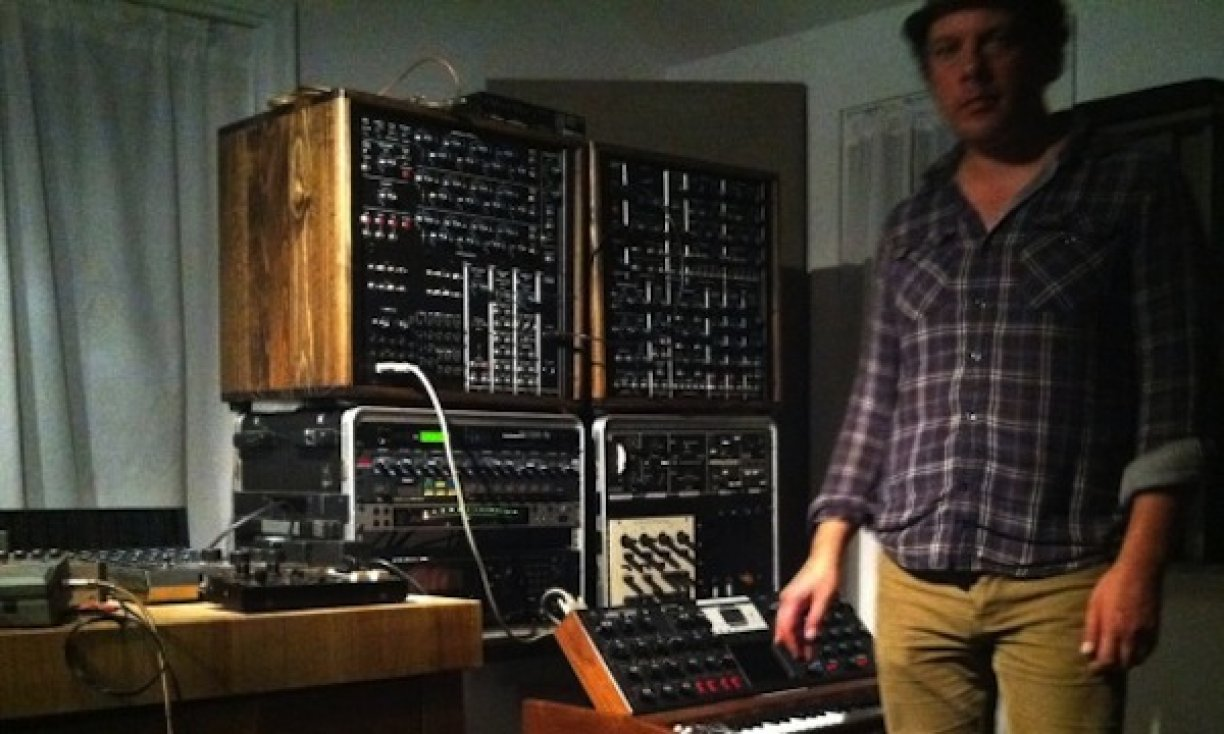
Mark Van Hoen’s sonic landscapes are spaces where memories, dreams, and technology intertwine. His creative journey began in his teenage years, influenced by avant-garde composers and electronic pioneers. In a contemporary context, his work remains a striking example of how music can be both intellectual and emotionally resonant. Read more on london-trend.
The early years and Mark Van Hoen’s artistic journey
Mark Van Hoen was born in Croydon, London, on 26 September 1966. He believes a pivotal moment in his creative development occurred around the age of 12 or 13. The catalyst for him was hearing Karlheinz Stockhausen’s avant-garde composition Kontakte during a music lesson, as well as discovering the new wave of British electronics. He was later influenced by icons of the scene such as Gary Numan, Brian Eno, Cabaret Voltaire, The Human League, and Kraftwerk.
By 1980, Van Hoen had already started making his own recordings, experimenting with radios, tape recorders, cassettes, and any electronic devices he could find that made noise. The young sound artist got his first synthesizer around 1982. He wasn’t just captivated by the music itself, but also by the timbres—many of which reminded him of the sounds of the steelworks near his childhood home in Birmingham.
In 1993, Mark Van Hoen signed a contract with the Belgian label R&S Records. His early releases under the pseudonym Locust were full of analogue synthesizers and the warmth of tape. He spent 1994 in a creative environment, living with Darren Seymour (of Seefeel) and Neil Halstead (of Slowdive), and from 1995, he set up a studio in the famous Fortress complex in East London. At that time, he shared a flat with another collaborator, the 4AD label artist Vini Miller.
By the late 1990s, Van Hoen’s creative path took another turn. His Locust project began to shift its focus towards vocal compositions, and he started releasing music under his own name for the first time. The sound artist combined deep, ‘oceanic’ drones with melodic pop lyricism, using technology not just as a tool but as a true catalyst for emotion. However, 1999 proved to be a year of change and challenges for him. When R&S Records was sold to Sony, Van Hoen and other artists left the label. An additional blow was the closure of the Fortress studio complex, which had served as his creative hub for many years.
More than a decade later, in 2013, Van Hoen returned to working with Neil Halstead, forming the band Black Hearted Brother. Their debut album, Stars Are Our Home, was a kind of manifesto for cosmic psychedelia. That same year, a session for the WFMU radio station prompted the sound artist and his colleague Louis Sherman to revive Locust. The result was the album You’ll Be Safe Forever (2013)—a return to experimental electronics with atmospheric soundscapes.
Soon, Van Hoen’s new collaborations included his involvement in Children of the Stones, another Black Hearted Brother album, and the release of After the Rain under the name Locust, which cemented the project’s revival. 2015 was both a retrospective and productive year for him: the cassette compilation The Worcester Tapes, 1983-1987 on the Tapeworm label showcased his early experiments. In addition, his solo album Nightvision on Saint Marie demonstrated his current sound—mature and profound, yet still just as emotionally rich.
Recognition and the significance of Mark Van Hoen’s experimental music
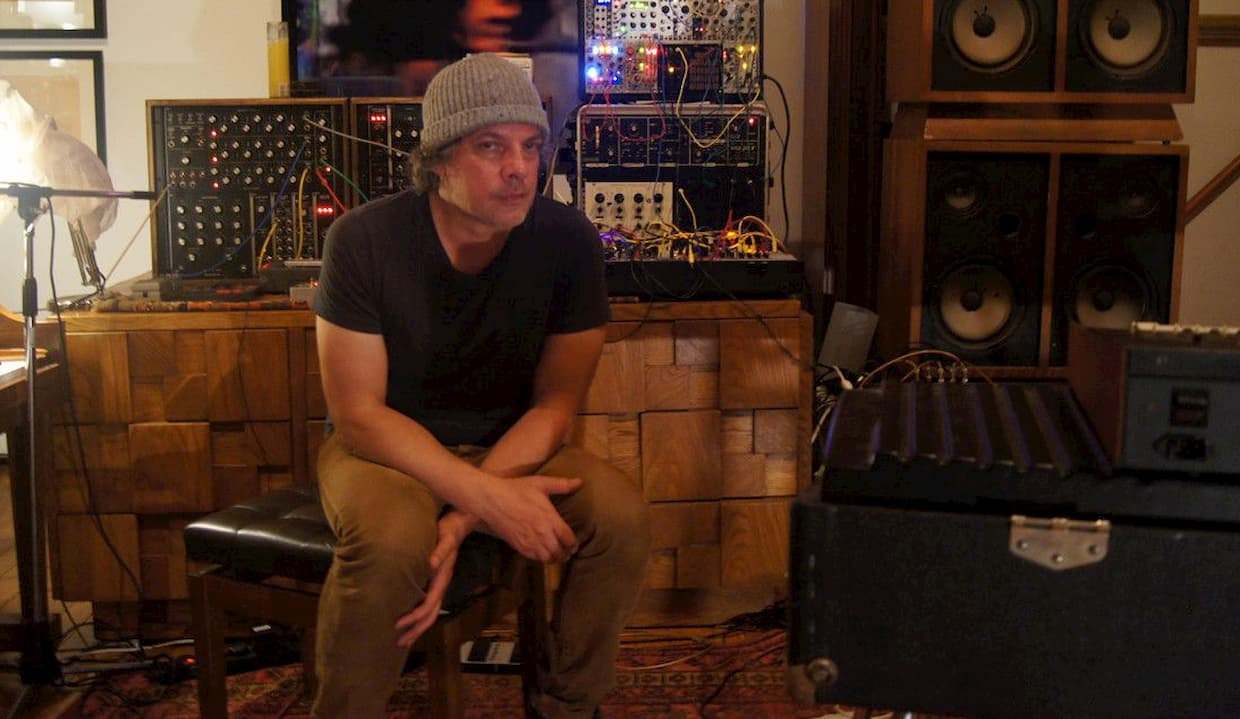
Mark Van Hoen’s creative work spans several decades and a number of projects, including solo works under his own name, the atmospheric-industrial Locust, and co-founding the innovative band Seefeel. Releasing on influential labels like R&S Records, Apollo, and Editions Mego, he has created albums that have become a benchmark for fans of experimental electronics. The Warmth Inside You, The Revenant Diary, and A Perfect Blind are particularly noteworthy. His music transcends genre classifications, organically blending elements of trip-hop, ambient, techno, abstract, and experimental music.