


The Gielgud Theatre is a place where you can discover a completely different world filled with new sensations and emotions. Its visitors can witness stage miracles and get involved in deep psychological questions. The artistic performance of professional actors will definitely touch every soul. Learn more at london-trend.
THE THEATRE EVOLUTION AND CHANGES
The history of the theatre’s creation and development dates back to 1906. That year, the first performance of The Beauty of Bath was shown on its stage. This musical production was created by the famous actor and producer Seymour Hicks, after whom the theatre was first named the Hicks Theatre. Interestingly, the very first production became extremely successful and the institution gained great popularity. That was just the beginning, and in the following year, 1907, Brewster’s Millions was shown on the stage as well. Apparently, this comedy about a man who tried to spend his fortune in 30 days in order to receive an inheritance remained in the hearts of everyone present in the theatre that day. The following the long-awaited premiere was A Waltz Dream. Since then, no one doubted the popularity of the theatre and the professionalism of its actors.
In 1909, the theatre was given a new name, the Globe Theatre. Then the theatre presented a performance of His Borrowed Plumes. Success accompanied the institution during the First World War too. In 1916, the audience burst into applause after watching Peg O’ My Heart. The outstanding production of Fallen Angels caused the same admiration in the audience in 1925.
DIFFICULTIES ON THE WAY TO SUCCESS
The war years were difficult for the whole world and the Gielgud Theatre wasn’t an exception. The shelling of London at the beginning of the Second World War forced representatives of most cultural institutions to halt their creative activities. Such a prospect awaited the Globe Theatre as well. However, difficulties only helped the theatre to move up to a new level and become even more successful after the war. One of the most famous performances in the entire history of theatre existence took place in 1949. The Lady’s Not for Burning caused incredible admiration and excitement in the audience. In 1954, the harsh and, at the same time, deep psychological drama The Prisoner was presented on its stage. In 1966, audiences enjoyed the theatre’s longest-running performance of There’s a Girl in My Soup. The theatre name, which has been preserved to this day, was given in 1994. The Gielgud Theatre was named after its director and actor John Gielgud. After this event, a large number of world-famous performances were presented there. Among them there are such notable and interesting plays as Design for Living, All’s Well That Ends Well, One Flew Over the Cuckoo’s Nest, Some Girls, God of Carnage and many others.
CURRENT STATE AND POPULARITY
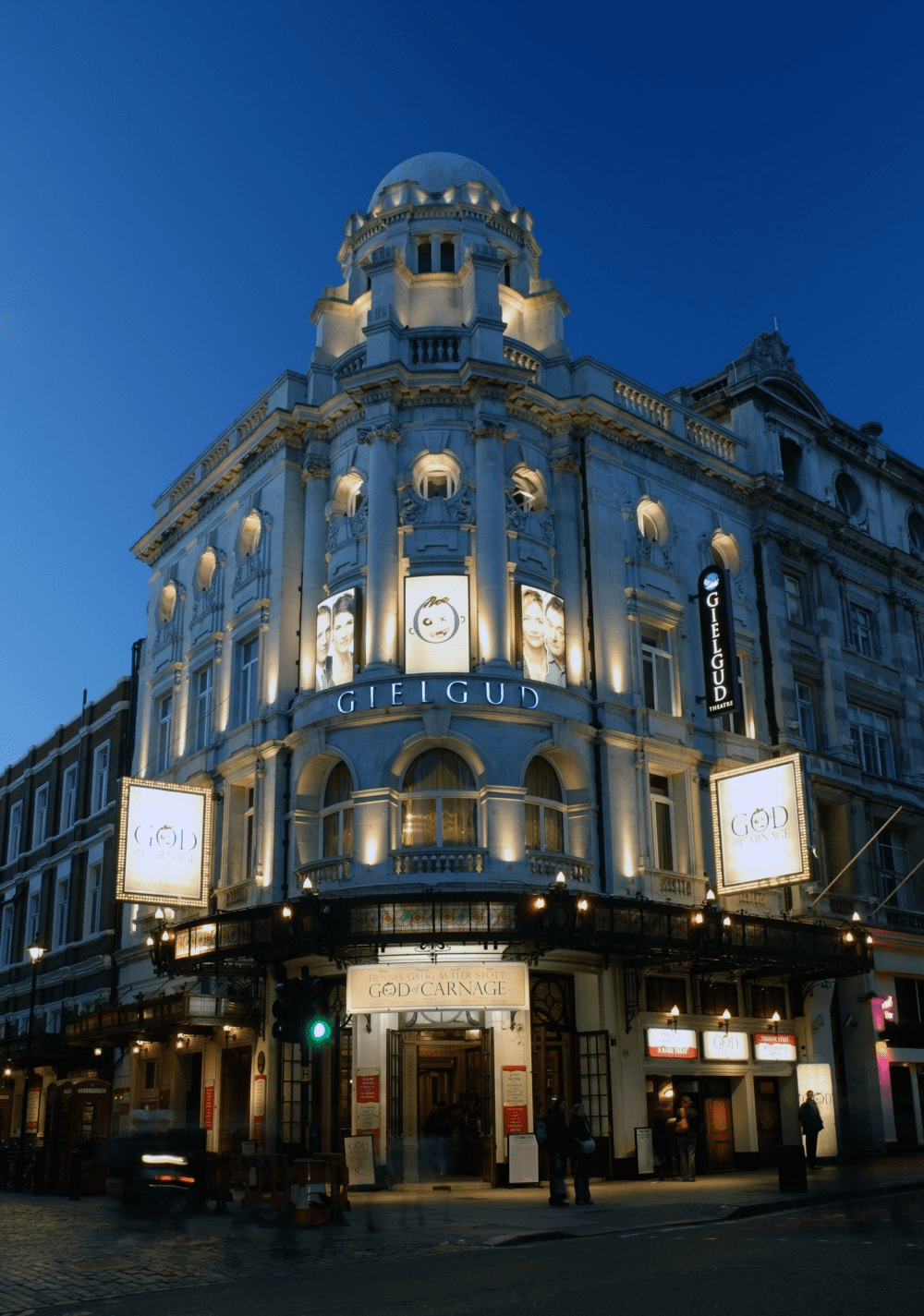
Nowadays, the Gielgud Theatre is extremely famous and a lot of London tourists want to visit it. The institution impresses everyone with its appearance and incredible performances. It has a seating capacity of 986. Visitors can try drinks and snacks in three local bars. Unfortunately, you won’t find hot dishes there, but given the assortment of products, it will be quite difficult to stay hungry. Moreover, it is forbidden to bring your own food and drinks into the theatre.
Thanks to the good location, there are many ways to get to the theatre. Usually, most visitors choose the underground and use nearby Piccadilly Circus and Charing Cross stations. You can also travel by bus or your own car. There are several parking lots close to the theatre and some even offer discounted parking in the afternoon. So, the Gielgud Theatre is a good place for cultural enrichment and art exposure.